Wi-Fi coverage puzzle
Mesh
Cover every square of the house with signal. No two nodes can see each other.

Tap: node → ✕ → empty · Press and hold: ✕
About Mesh
Mesh is a logic puzzle about Wi-Fi coverage. Each board is the floor plan of a house. Tap a square to place a mesh node, and its signal shoots out in straight lines in all four directions until it hits a wall. Your job is to cover every square of the house. The catch: two nodes that can see each other along a straight line interfere, so no node may sit in another node's signal.
Numbered walls are outlets. Exactly that many nodes must sit right next to an outlet, directly above, below, left or right of it, and a 0 means none can. Outlets are where the logic lives: a 4 fills every side at once, a 0 rules out its neighbors, and each node you place cuts off every square it can see.
There are 60 levels in five packs, from a 5×5 studio to a 10×10 estate, and endless estates after that. Every numbered board has exactly one solution, checked by two separate solvers when the boards were built, and every one can be solved by logic alone, so you never have to guess. The first five levels teach one idea each.
The Daily Survey
The daily is three houses back to back on one clock: an apartment (6×6), a house (8×8) and an estate (10×10). Everyone gets the same three houses, hints are off, and your result shows a time for each one, so you can see exactly where you won or lost time against a friend.
Tips for clean runs
Start with the outlets. A 4, or a 3 against the edge of the board, tells you exactly where its nodes go. A 0 means every square next to it stays empty, so mark those with an ✕. Then look for a square that only one spot can still reach: a dead-end corner, for example, has to hold a node itself. When an outlet turns red, it can no longer be satisfied, so something nearby is wrong.
Real mesh networks work a little differently: signal fades with distance and passes through walls with some loss, and real nodes are meant to overlap. If you are planning an actual network, our guides on Wi-Fi 7 at home and outdoor Wi-Fi for yard cameras and gates are a better place to start.
Questions
Is there a new puzzle every day?
Yes. The Daily Survey changes at midnight in your time zone, and everyone gets the same three houses, so you can compare times. You get one counted try per day; levels are there for unlimited play.
Does my progress save?
Yes, on this device. Scores, streaks, settings and games in progress are saved in your browser and never sent anywhere. Clearing this site's data in your browser resets them.
Is it free?
Yes. There is no account, no download and nothing to buy.
Do I ever have to guess?
No. Every numbered board has exactly one solution, checked by two separate solvers when the boards were built, and you can always reach it by logic alone. The first two tutorial boards have more than one answer, and any layout that follows the rules counts.
What do the stars mean?
One star for covering the house, two if you didn't use a hint, and three if you also beat the par time. Each three-star level adds a hint to your bank.
Can I turn the music off?
Yes. Tap the music button with the moving bars at the top of the screen, or open Settings. Mesh has its own original track that adds layers as the signal spreads, and sound effects have a separate switch.
How do challenge links work?
After a level, tap Challenge a friend. The link carries the level and your time, so your friend plays the same house with a target to beat. Everything is in the link itself: there is no account, and nothing is stored on a server.
Is this how real mesh Wi-Fi works?
Loosely. Real signal fades with distance and passes through walls with some loss, and mesh nodes are meant to overlap a little. The puzzle keeps one honest idea: walls block signal, and node placement decides which rooms get coverage.
More from Enzo Arcade
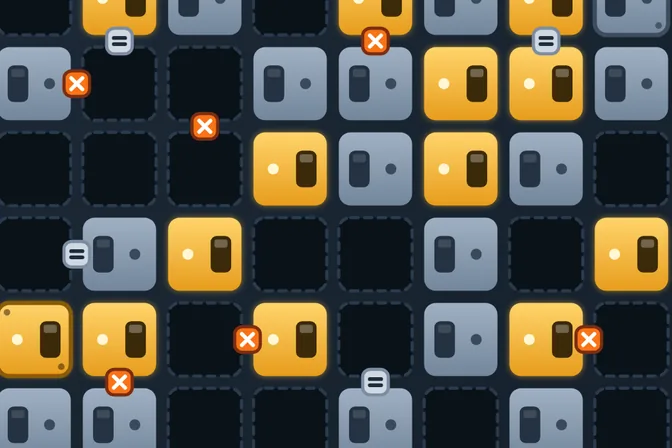 Breaker BoxFlip every breaker ON or OFF so each circuit is balanced, with no three in a row. 60 levels plus a three-panel daily inspection.
 Cable RunPatch every matching pair of ports without crossing a cable, and fill the whole panel. 150 levels plus a three-panel daily gauntlet.
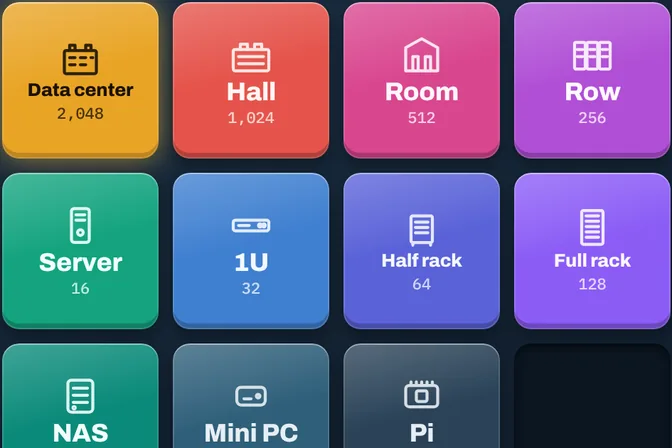 Upgrade PathSlide and merge matching hardware, from a Raspberry Pi to a planet-scale data center. Endless play plus a 100-move daily sprint.
 SkylineOne tap per floor. Whatever hangs over the edge gets sliced off. Endless towers plus a 30-floor daily blueprint in gusty wind.
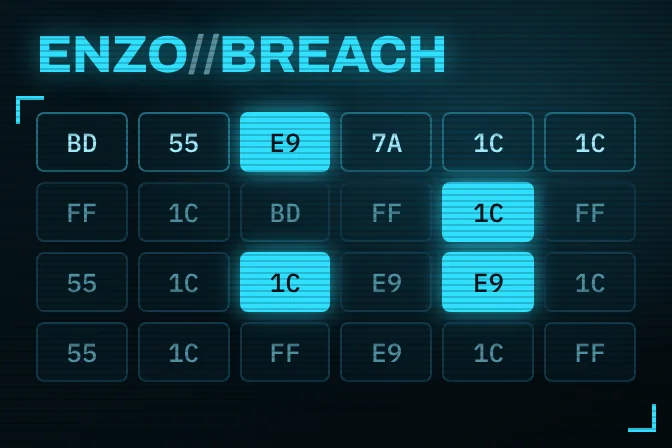 ENZO//BREACHThe daily hacking puzzle: chain hex codes through the matrix and upload three daemons. Plus Deep Dive, the endless mode.
Free from Electronic Enzo. Scores, streaks, settings and saved games stay in this browser on this device. See every game in the Enzo Arcade.